Sunday, October 14, 2012

Out in the Field


A Pair of Beeches and a Sweet Chestnut

Yesterday found the Friday plein air class back at Oak Hill. We started out at 38 degrees, and managed to just get to 50 degrees by the time we stopped. This might not have been so daunting but we had a persistent breeze into the bargain.

Nonetheless, we're all hearty souls, and we painted on!

Here's a photo of the demonstration I did en grisaille (I guess it should be en brunaille, really), finally painting these two massive beech trees that I've known for some years. 

Somehow they've thrived, while being only a few feet from each other. They seem rather like an old couple, making allowances for each other.

Oil, canvas tinted with Old Holland transparent red oxide, 24"x18"

Oil, on a canvas tinted with Old Holland transparent red oxide.

During the Scottish workshop, I painted the tree below en plein air It's a 400-year old+ sweet chestnut, one of three remaining from an allee planted by the Augustinian canons, some fifty-odd years before the birth of Rembrandt.
Oil on linen mounted to panel, 18" x 15"

It's quite sketchy, but it brings me back immediately to the sense of ye wildwoode that these trees conjured up.  A bigger contrast to the peaceful majesty of the beech trees would be hard to imagine.

Behind are hazels, which grow from a base called a 'stool'. The canons would harvest them for poles, tool handles, etc., growing them as a crop. Soon new shoots would grow up from the stools, and in a few years there would more poles to harvest.

Paint well!

Return of the Natives


Our Scottish Idyll!

Safely home, it's time to reflect a bit on our Scottish idyll. I, for one, had a marvelous time, painting in sunshine and under clouds. The landscape, as you will know, is one of great variety, and we were hard-pressed to decide what to tackle next. Here we are, on the first day, high up in the Queen Elizabeth National Forest, just beginning the day's work. The shifting clouds made ever-changing patterns on the hills, posing a challenge in terms of fixing a specific motif yet, at the same time, creating an exhilarating sense of the sky on the move.


Our second day found us along the edge of Loch Venachar, amid a grove of trees. During our time there we were questioned by some curious park rangers, eager to note that the spot was full of landscape painters. In fact, they took quite a number of photos of us. It seems it's possible that we'll be featured in the National Parks calendar for 2013, illustrating artists using the great resources of the parks. Perhaps we'll have our own version of Calendar Girls!


A landscape painter's dream, I'd say! (photo Christine Elvin)

On Monday, the skies were sullen, with spitting rain. We decided that it should be the day to go see the Glasgow Boys in their dedicated space at the Kelvingrove Art Museum in Glasgow. The museum (free) is a treasure trove of art and natural history. We spoke about the Glasgow boys paintings as we went around the gallery, seeing some familiar work in person for the first time. We also were entranced by the Raeburn portraits and by Bastien-Lepage's  La Pauvre Fauvette.

James Guthrie, Hard At It

Henry Raeburn, Mrs. William Urquhart

Jules Bastien-Lepage, La Pauvre Fauvette


On day four, we were off to Inchmahome Priory on the island of Inchmahome, smack in the middle of the Lake of Mentieth. Here's the island from the air.


And here we are, waiting to board the twelve-person 'ferry' to the island.


 A view of the church at Port of Mentieth as we embarked.


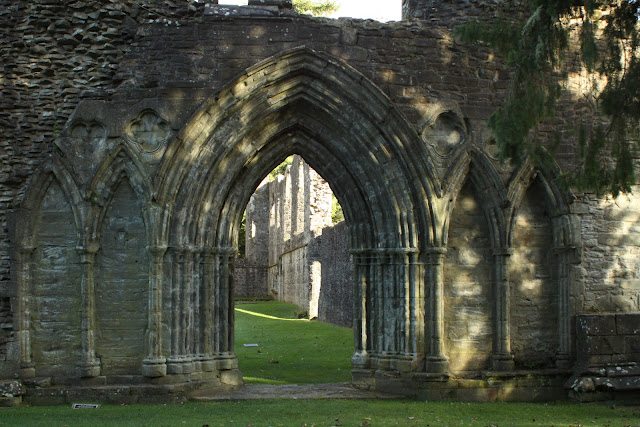
Once we arrived at Inchmahome, we found ourselves in a magical landscape---the ruins of the 13th century Priory of the Augustinian canons didn't disappoint.


We had a great day of painting, so much so that we all agreed to go back the next day. As luck would have it, we had a birthday girl among us. Compliments of the owners of our B&B, we had a lovely chocolate cake with which to celebrate. But where's the birthday girl---Big Red? She's not in the photo!


My kind students suggested that I take the morning to paint just for myself, without doing a demonstration. I hie'd me to the adjacent woods where there are three remaining sweet chestnuts, planted by the canons four-hundred plus years ago. (A photo of the painting will be in my next post.)


The afternoon brought the rounds of helping students as they forged ahead with their work.


We were sorry to leave at day's end. It had been a magical two days, far removed from the world, thrust, seemingly, deep into the middle ages.

The town where we all were staying was a wonderful place. All of our accommodations were great, and we received much help from the folks at the tourist board, and from the hosts of our B&Bs. Here are some different photos of the early morning in Callander. The River Teith winds through an area called Callander Meadows, right along the main street.


And everyone's favorite hardware store in Callander:

On our last painting day, we were somewhat confounded by rain in the morning. Set up we did, where I laid in a grisaille of this view.

But those clouds over Ben Ledi continued to mass and, a short moment later, my easel was under a Fenway Park poncho!


In true Scottish fashion, however, the sun came out again after twenty minutes. One of us had retired for the day, with an easel broken by being upset by the wind. Lunch awaited. 

Several of us set up again. Of course the clouds amassed anew. Being prudent adults, we decamped for the pub.


Soon we were fortified by real ale and tea, and off we went to an ancient bridge I'd seen.


We all painted good starts, desperately pretending that our magical stay in Scotland was not drawing to a close!

The night before, we had all dined together at Callander Meadows, a lovely restaurant on Callander's Main Street. I, of course, had to have the sticky toffee pudding for dessert.


On Saturday, class over, we were off in different directions, using our few remaining precious days in Scotland. Some were off to Edinburgh, some into Ayrshire, and others organizing their departure.

We had had a stupendous time. Everyone seemed to make great progress with their work and I found my own head filled with Scottish images, just waiting to burst forth in the studio.

Next February, we expect to be in Savannah, and June will find us in both England and in France. Join a workshop---you come, too! If you'd like me to keep you posted on these three events, or if you wish to sign up, write to me at dbjurney@verizon.net The workshops are quite limited in size, so be in touch soon if you want to be included in our next adventures!

Happy Painting!

p.s. I can truthfully say that I've never, in my many decades of traveling, ever had a better lodging than we had at the Westerton B&B in Callander. Mike and Lesley were the most remarkable hosts, anticipating our every need! We arrived as guests and left as friends. I encourage you to visit them for a truly wonderful Highland experience.


Tuesday, August 28, 2012

In Progress

On the easel...

Here's a detail from a 48" x 72" painting which is now on the easel. Although it's early days,  it's beginning to have a personality.


The photo ain't swell, but you'll get the idea. 

It is always a challenge to switch back and forth
between working on a small canvas outside and on a large painting in the studio.

But it does help to keep one flexible. Perhaps it even builds character.

Friday, August 24, 2012

Plein Air Class

Friday Plein Air Class
24 August


Today the Friday class met at Greenwood Farm again, but with a very different prospect in view. We hiked further into the property, until we had a view of the Paine House, silhouetted against the Ipswich salt marshes.

It's a motif, though usually backed up by the ocean, that was used repeatedly by Worthington Whittredge (1820-1910), an American painter. Whittredge traveled a road leading from his early Hudson River School paintings to his later life interest in the French Barbizon painters. Initially he studied in Germany, so he came a very long way indeed.
Whittredge deserves to be better known. In addition to writing an engaging autobiography, he modeled for Emmanuel Leutze, standing in for The Father of Our Country in Leutze's giant canvas of Washington Crossing the Delaware.

Today the task was to paint a back-lit, hazy subject in a situation of strong glaring light. The trick seemed to be to paint the objects in a hazy way, while still having a few strong darks to reinforce the lights.


You can see that the canvas was primed a thin pink, actually a tint of Blockx Jaune Capucine Clair----which, despite its name, is definitely reddish.

This, of course, is just a beginning. Finishing a 16x20, on site, in direct light, is a bit more than I can manage. But also, to the horror of real plein-airistes, I think that most plein air paintings benefit from a time-out, in the studio. Usually I'm then able to re-organize my thoughts, and to refine things without battling changing light, etc.

My real goal is to make a good painting, one that is true to the spirit of the place. This rarely requires a whole catalogue of facts about the scene. Mostly it wants an eye sympathetic to the mystery and poetry of the site.

Should I do more, I expect I'll post it. At the moment, as those of you know who follow the blog, I have a huge backload of paintings begun in class. Perhaps they'll be fodder for good work when it's icy outside. In the meantime, I'm working on a 48"x72" canvas, most definitely NOT outside.

Oh, yeah...when I go back in to sort this out, I'll paint in the apple tree. Don't worry.

Paint well.
 

Wednesday, August 22, 2012

Really Dead Painting

The DPS in Spain

It seems, according to the BBC website, that The Dead Paintings Society, while on vacation in the US, is currently active in a church near Zaragoza, Spain.


It appears that an elderly parishioner, distressed about the condition of the painted fresco in her church, took matters into her own hands. The result is above.

Although, in the US version of The Dead Paintings Society, I often feel no compunction to stick with the original work, even I think this a bit too much of a departure. Apparently the woman, in her eighties, ultimately despaired of her effort and contacted a city councillor.

One hopes the painting can be properly restored. 

http://www.bbc.co.uk/news/world-europe-19349921


Friday, August 17, 2012

Plein Air Class

Friday Plein Air Class Demonstration

Here's an 18" x 24" demonstration from our Friday Plein Air Class. We met at Greenwood Farm, a property of The Trustees of Reservations, in Ipswich, Massachusetts.

It is a lovely spot, and I'm pleased to say that everyone came away with a nice start. As for me, this is as far as I got.


Wednesday, August 15, 2012

Surfing in the studio

Ah, the sea, the sea!

A week or so ago, I was invited to paint with friends at Bald Hill Cliff, Ogunquit, Maine. It's a site that well-known marine painters have visited for close to a century, featuring a sheer cliff, and waves crashing on ledges. A veritable cataclysm of elemental forces, very much a sea symphony.

I declined to go, though, despite the enticement of painting with my friends. For me, the
hullabaloo of the crashing surf is a little overwhelming. I texted one of the friends, saying that the "bang! crash! whoosh!" was decidedly not me.

Instead, I repaired alone to my recent haunt on Deer Island, posts of which you may have seen over the last ten days. No whoosh! Just the occasional annoying jet ski in a "no wake" zone.

Today, wanting to do something different, and being confined to the studio because of the weather---though, truth to tell, it was a welcome respite from all the sunshine we've been having----I decided to have a mini Dead Paintings Society on one of my own canvases. I had a painter friend also painting in my studio, and so I had company just in case I
wanted to shoot myself, or the canvas.

The dead painting was finished about two years ago, and it had a brief exposure at one of my galleries. Although I liked it quite well, it failed to find favor with the discerning public. Eventually, it was returned to me in disgrace. Here's what it looked like on its return:


About a year later----thus a year ago----I decided to lower the horizon, thereby eliminating all the buildings. I was still very fond of the sunken road, and didn't want to monkey with that. But what else to do? Nothing, in fact...until this morning. Here's where it was at 11:00 a.m., Eastern Daylight Savings Time.


Recently I was looking through a book about Frederick J. Waugh, an important, mid-20th century marine painter. Waugh was speaking of the need to understand the sea before one painted it. He remarked that he almost never, except for very small occasional studies, painted the sea en plein air.
I had an excuse! Waugh said I didn't have to deal with the Bang! Crash! Whoosh! He was giving me, and everyone else, permission to paint the sea in the studio! Yippee!
No wind, no glare, no angry seagulls! Instead we could have controlled light, coffee, couch...everything one needs. With Richard Rodgers's score to Victory at Sea on my CD player, I set to work.
After two long hours, this is where I stopped. The fact that I'd failed to heed Waugh's first dictum, that I needed "to know the sea", hadn't seemed so important until I found myself confronted with ten thousand metric tons of surging salt water, right there in my studio.

It was only then that I remembered that there's a reason I paint trees.